Friday, 8 July 2016

Small pleasant things

I have spent the last two weeks veering between rage and sadness about what is happening in the UK. Today did not start off well – I turned on the news to see an interview with a young woman from a Polish family – the eldest of four children – whose large garden shed has been set alight in the middle of the night. Someone had left an anonymous note (words cut out of newspapers and stuck on paper) “go home it will be your house next”.  They have been in this country for many years and lived in their house for nine years and work hard.

What struck me was as much as the awfulness of what had happened was the way she emphasised how wonderful the police and fire service had been, how reassuring they had been and supportive. She was then asked about other issues and spoke of verbal abuse to the children calmly, other incidents in the Polish community and how they try to deal with them rather than go to the police. Coming from apartheid South Africa in the 1960s – a country that had much to be ashamed of – I was so proud when I became a British citizen. I am embarrassed by what some of my countrymen are doing.

With this on my mind, I went on the Underground and changed trains at Kings Cross – a very busy station. There were several empty seats on the train and when I sat down I noticed that there was a ‘not so young’ man of Asian appearance sitting holding his walking stick in the seat reserved for “those less able to stand” which he clearly was. He had dozed off and next to him was an empty seat and his shoulder bag had slipped down onto the seat so no one could sit there. I waited to see if someone would wake him and ask him to move it (hopefully politely – you never know in the current climate).  More and more people got onto the train – of all colours and speaking all different languages – and stood: everyone looked and no one said anything. His bag remained on the seat.  This went on for five stops and then he woke and got off. London didn’t let me down.

I then went to the Barbican Library – I joined years ago soon after it opened, left when I left work and rejoined earlier this year. If you go during the working day it is peaceful; the book selection is amazing and the staff wonderful. 
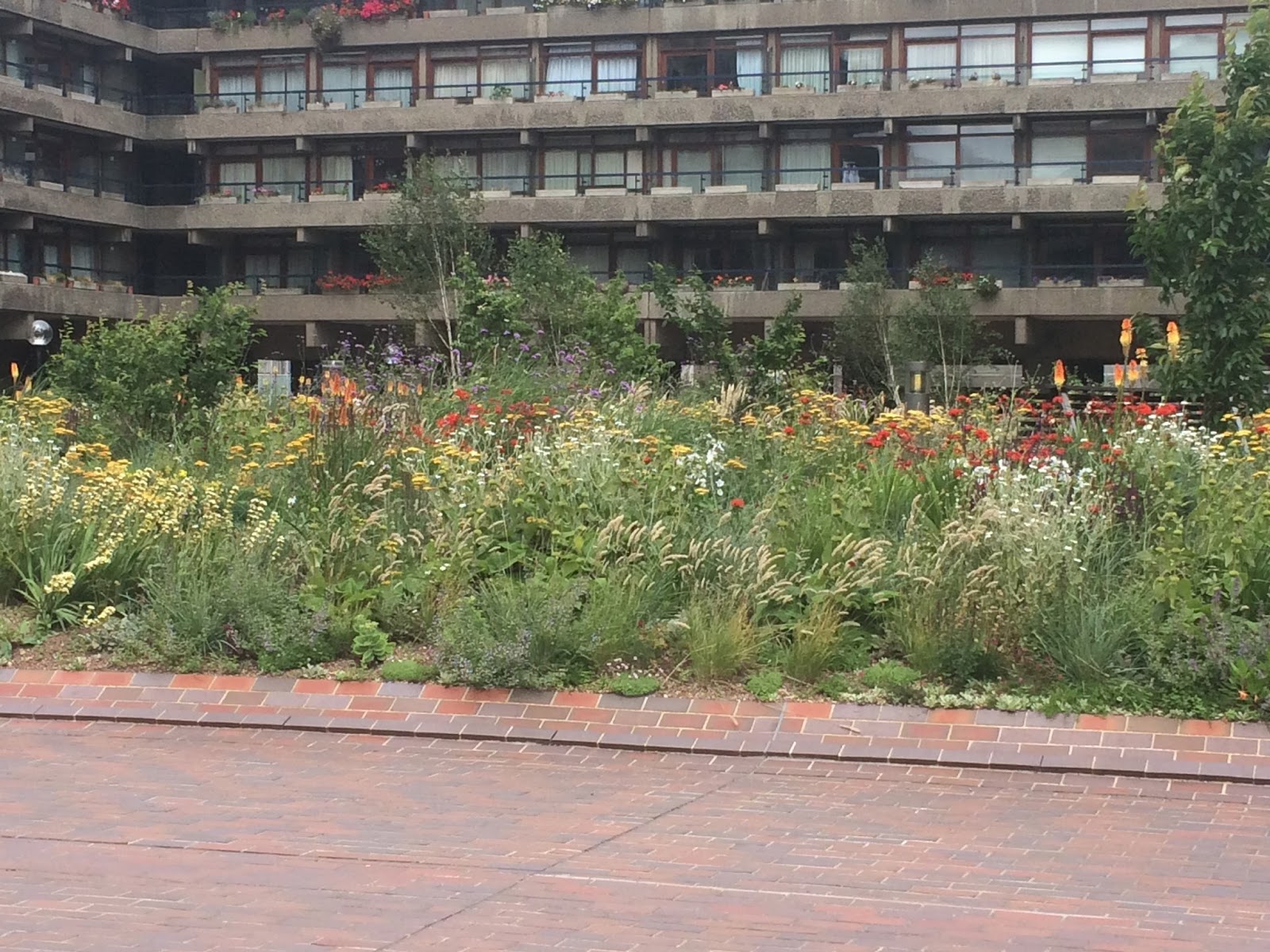


I normally go another route but this time went from Barbican Station along the walkway to the High Walk and was stunned to find a series of beautiful wild gardens in the midst of all the brick, concrete and glass.  I hope there are beehives nearby – they would have a wonderful time.

Came home calm and restored.


Tuesday, 5 July 2016

A Leader? A Manager? A bit of both?


In the current turmoil in UK politics, this is a very topical discussion. 

There are a number of definitions – “leadership is the action of leading a group of people or an organization, or the ability to do this”

“The manager’s job is to plan, organize and coordinate. The leader’s job is to inspire and motivate.”

“Leaders lead people: managers manage tasks.”

I was never quite sure where leadership ended and management began – can managers be leaders and vice versa - clearly there is overlap.  Leaders didn’t have to be good managers providing they were very self-aware and surrounded themselves with people who were good managers and to whom they would listen. Trying to assess which managers would make good leaders was more difficult. One clue was how much responsibility they took for their team’s performance and what they did about it and how creative they were. I still made a couple of bad mistakes!

I remember meeting Michael Dell (founder of Dell Computers) nearly twenty years ago when he spoke to a small group in Austin, Texas. His start-up career is well known and he said that they had been working in a hub and spoke management style – he was the hub and everything radiated out from him. He realized that this would not help the company grow so brought in very experienced non-executives and advisers to help him implement a management structure – the rest, as they say, is history.

The fallout from the Brexit vote dominates our lives – namely leadership issues in the Government, Labour Party and UKIP.  UKIP has only one seat in the House of Commons and he is a defector.  You could argue as their Leader did when he resigned that the purpose of the party was to leave the EU which is in train. Not sure what their raison d'être is moving forward. (These foreign words – they get in everywhere.)

Then the Government: pretty obvious that the PM would resign if he lost and a formal process was then in place. Bit of back-stabbing (and front-stabbing and then stamping on) on the steps of the Forum and Caesar (aka Boris Johnson) was down and Michael Gove was standing for Leader. Boris was a charismatic leader (his finest moment was the 2012 Olympics) but a hopeless manager and not aware enough to deal with it.

Not only did Gove sabotage Johnson (who isn’t actually dead but has retired hurt) but Gove is the man who offered “if anyone wants me to sign a piece of parchment in my own blood saying I don’t want to be prime minister, then I’m perfectly happy to do that” he was very clear “I don’t want to do it and there are people who are far better equipped than me to do it” – not sure what changed in a few days.  (PS – for my foreign friends, UK laws are still written on parchment albeit it not in blood – it lasts forever.)

None of the candidates went to posh schools, they come from “ordinary” backgrounds and mostly had careers in the real world before entering parliament. Commentators seem to want someone who is perfect and has no historical baggage – that person doesn’t exist. It is a question of what we can live with.

I don’t know what will happen – especially in the current environment but the bookies are saying it will be between the two women – Theresa May and Andrea Leadsom.  Theresa May is not a charismatic leader but a leader she is, doesn’t duck the difficult questions but also doesn’t make it personal. She has gravitas, doesn’t hang out in the bars in Parliament, gossip and probably isn’t very clubbable – thank goodness. The next few years are going to be grinding – who do you want to see talking to Merkel, Tusk et al, the next President of the USA, leaders of China and India? She was a "remainer" but did not invoke durm and strang (sorry - foreign words again) but was very even-tempered during the campaign.

Andrea Leadsom is an unknown quantity – very personable, is that enough? She was very high profile in the "leave" campaign but has already watered down a couple of her statements. Wait and see. (I am not a member of a political party so don't have a vote.)

As for the Labour Party – I need to go and lie down in a darkened room first.  I am still trying to overcome my rage at the debacle of the launch of the report on anti-semitism and yesterday’s appearance of their Leader, Jeremy Corbyn, in front of the Parliamentary Select Committee on Anti-Semitism.

Who knows what could happen before tomorrow.

Thursday, 30 June 2016

How not to face the media!

“How to face the media” was the subject of a training day I attended when I was running a breast cancer research charity. This was at the height of the vile and dangerous campaign by animal rights activists about medical research using animals. (It was vile – they dug up the body of an old woman from a cemetery to ransom to her family and dangerous, they bombed scientists and scientific establishments). 

One of the pharmaceutical companies arranged a training day for some of their key staff and very generously included a few people from charities. The pharmaceutical staff needed to know how to deal with aggressive journalists, most of our interaction with the media was gentler.

It was a most valuable day and a couple of generic lessons stuck in my mind. If the subject affects your sector but not your organisation you can say no.  You can say no anyway but then they may well say – “no one would comment”  The second and most powerful was – from the moment you walk into the studio or the journalist comes into your office you are on the record. Even if you believe the microphone or camera are switched off, don’t risk it.

When Prime Minister Gordon Brown called a woman he had just been very polite to a bigot he didn’t realise he still had the microphone on, even though he was back in his car (see here for the full story). This haunted him for the rest of his career.

Our charity was once approached by a TV company who wanted to do a “day in the life, behind the scenes” at our office.  The Fundraising Department was very keen – wonderful exposure.  My response was, not under any circumstances: not because we had anything to hide, we were very proud of how the organisation was run and our staff but we couldn’t control the off the cuff remark someone might make which could be misinterpreted, the phone call that might come in or how it might be edited. 

That’s why I was so surprised to see that Seamus Milne, Jeremy Corbyn’s Executive Director of Strategy and Communications, allowed a reporter from Vice to do exactly that.  Milne used to be a reporter – did he think that because the reporter was a life-long Labour supporter that it would be just fine. It starts off that way but turns into a car crash.  Watch it - here


While this wasn’t disastrous – things then became worse.  After over half the Shadow Cabinet resigned, new appointments were made and it was thought a good idea to let the cameras in to their first meeting. Not only does it start with Corbyn saying that he is not sure this is a great idea but when they regroup the people around him have moved seats – one key person is not there.  Seamus I'm not sure this is a great idea either has now gone viral.

Wednesday, 29 June 2016

Post Brexit – this time sad

Anti-Semitism has been a thread running through the last few months in the UK before the referendum campaign kicked in. There has been much discussion in the press and certainly on university campuses. After several members had been suspended for their views, the Labour Party eventually – eventually – launched an investigation into anti-Semitism in the party – we are not very confident, given the lack of cohesion in the party at the moment and its leader’s associations in the past, that this is going to work.  Let’s see.

And that’s why I am sad.  I never thought when I came to live here so many years ago that I would feel uncomfortable – but I, and many of my friends, do now – even though our day-to-day lives have not changed.

I came to the UK from South Africa for a few years in the sixties and then came back in 1977. I was relieved that at last I was in a country where my colour didn’t matter and my religion didn’t matter either.  I was naïve about racism based on colour – it certainly existed but most people got along and my religion didn’t matter to most people either.

There is a rise in overt anti-Semitism in many European countries and in the USA – it has probably always been there but the presence of 24 hour news means that it is instantly available to everyone which encourages others to do the same – if someone else is doing it then it’s OK for me – and leaves us feeling perhaps more insecure than we need. What we are experiencing now is fear of and hatred of the “other”.  The “other” is anyone who doesn’t look like me or sound like me, has a different religion or belief or even a different political view.  See the photo I posted yesterday of a left wing Corbyn supporter calling others “vermin”.

Nigel Farage posed in front of a poster showing a dense stream of people who were allegedly flooding into the UK. The UK has taken a pitiful number of refugees so that can’t be why people voted to leave the EU. People who are smuggled or trafficked in and are here illegally are nothing to do with the EU.

I know people who are not racist, not anti-European but voted to leave because they were fed up with being “told by Brussels what to do” – this is misguided and wrong and we may well end up doing all the same things as before to continue to trade.

But there those who voted to leave the EU because of Europeans coming in and apparently taking their jobs (for lower wages), houses, school places and clogging up the doctor’s surgery etc. If they stop coming we will need to persuade people from India, Bangladesh, Pakistan, the Middle East, Africa and elsewhere to come here and do the jobs that you are not qualified for or won’t do – is that what you meant?  If they don’t, our health service will collapse – not only the carers and cleaners that everyone seems to think about but highly skilled doctors, nurses and scientists. You will have to wait longer for your operation or your chemotherapy. Is that what you want?

I do believe that most people are reasonable, don’t hate and don’t abuse – but through the 24 hour news reporting and statements made in the Referendum campaign – racism in its broadest sense is in danger of becoming normalised.

That’s why I’m sad.


Tuesday, 28 June 2016

Post Brexit – angry and sad

I have not blogged for some months. Everything seemed too awful or too trivial and every time I sat down to write I was immediately stuck.

However, in the UK a momentous referendum was held last week and we will be leaving the European Union.  David Cameron, the Prime Minister, has resigned – whether you think the “Remain” campaign was good or not, it was his campaign and he, quite rightly, doesn’t think that he should be the person to negotiate the exit. 

The Leader of the Labour Party, Jeremy Corbyn, failed to lead the party: although the policy was to "Remain", his attitude convinced many people that he was for “Leave” as he always has been and, as I write, more than half his Shadow Cabinet have resigned and there has been an overwhelming vote of no confidence today – 172:40. He has said “I’m not going anywhere” – well that can be interpreted two ways.

Why am I angry? I am not angry because I voted “Remain” for the future of this country, peace in Europe and particularly for my children and grandchildren but my side lost in a democratic vote.  I am angry because I am now told that it’s my generation’s fault. The actual demographics of the referendum are not known – they are assumed and the assumption is that most people over the age of 60 voted Leave and 75% of 18 – 25 year olds voted to Remain – that is when they voted.  The older generation traditionally have a high turnout and some sources have quoted that under 40% of the younger generation actually voted – but it’s all our fault. This is quite a good article How did different demographic groups vote in the EU Referendum

I am over 60, draw a pension and am white – therefore the assumption is I voted Leave – wrong.  I am also an immigrant and Jewish. The first is significant because some immigrants have been told to go back where they came from (usually not English speaking or white) and the second because the referendum campaign unleashed a rash of racism – it almost seemed to give ‘permission’ to people to express suppressed racism – and the Jews are always targets in the end.

A wonderful, gifted young woman Labour MP, Jo Cox, was shot dead outside her constituency office (by a white Christian, British born man – given the events in Orlando, this is significant).  She believed in the EU and was campaigning for “Remain”.  Parliament was recalled, there were emotional scenes in the House of Commons and all party leaders went to her constituency to pay tribute to her. 

But, one week later, last night, at a rally by the left of the Labour Party (although most placards seemed to be for the Socialist Workers’ Party) John McDonnell, Shadow Chancellor, said:

"Now a number of MPs have complained that people have been turning up in demonstrations to express their view. Some have described it as rabble, or mob rule or whatever. Let me be clear. People have the right to peaceful protest. The protests will be peaceful, but the reason the protests are taking place is that we will not allow a handful of MPs to subvert Jeremy’s mandate."


They haven’t been peaceful and MPs and their staff have complained of being threatened and harassed. The “handful" of MPs – 172 against 40!

I will write about "sad" tomorrow - still too angry!